Hair Loss Photos for Doctor: What to Bring to a Dermatologist Visit
A dermatologist-ready guide to hair loss photos: angles, timeline notes, treatment history, and what to bring to a hair loss appointment.
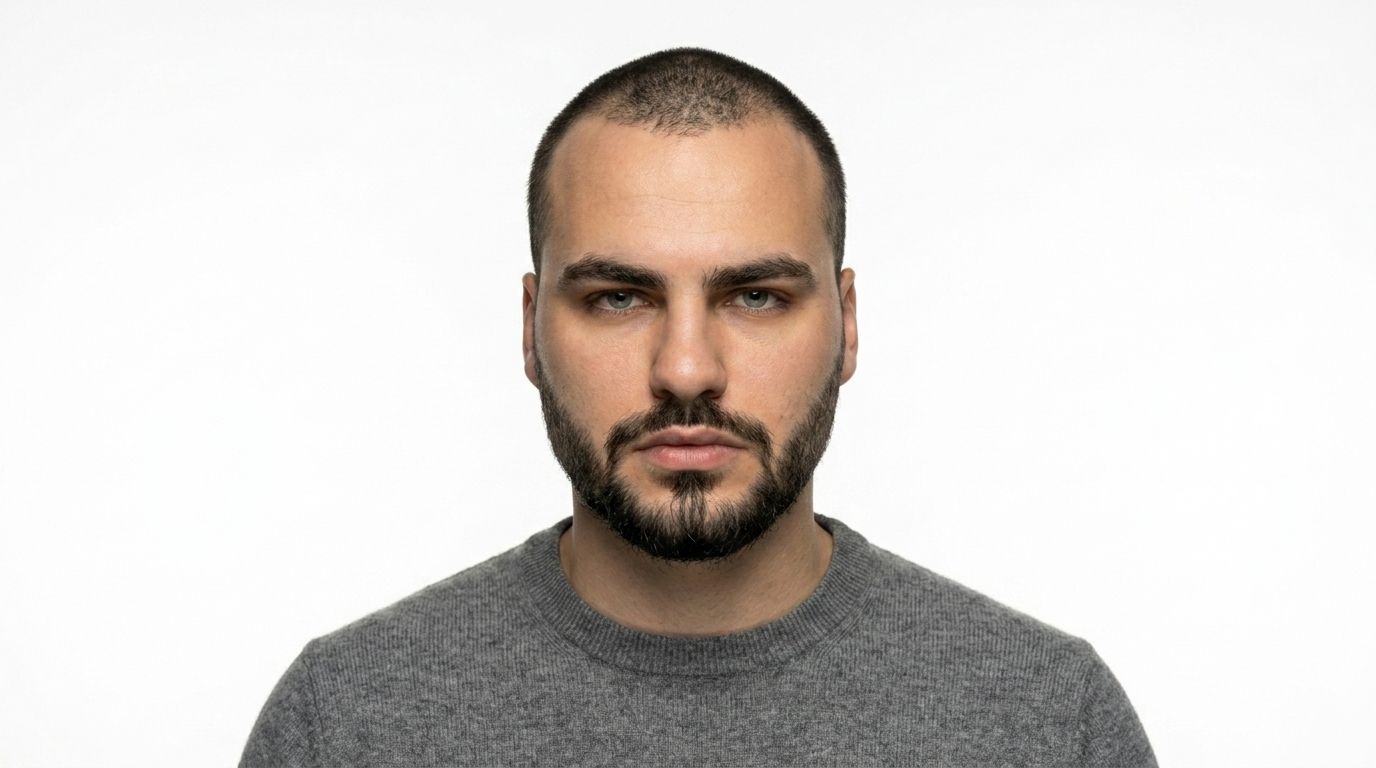
Quick answer: bring consistent scalp photos, a timeline, and your treatment history
The best hair loss photos for a doctor are not dramatic selfies. They are boring, repeatable reference images: front hairline, both temples, top-down, crown, and any area that changed. Pair them with dates, treatment start dates, shedding notes, scalp symptoms, and questions you want answered.
Not medical advice. Folicle helps you measure and document hair-loss progress. It does not diagnose hair loss, prescribe treatment, or tell you to start, stop, or change medication. Use this as a tracking framework and bring questions to a board-certified dermatologist.
Why hair loss photos for a doctor matter
Dermatologists diagnose from history, exam, and sometimes tools like trichoscopy, labs, or biopsy. Photos do not replace that. But photos can show timing and change in a way memory cannot. If you say “it got worse around March,” your clinician still has to imagine what that means. A dated photo timeline makes the conversation more concrete.
Good photos are especially useful when the change is slow. Hair loss can feel urgent every morning, but visible density often changes gradually. Bringing a clean comparison gives the appointment a starting point instead of a guessing game.
The five photos to bring
- Front hairline: camera level with your face, hair pulled back consistently if needed.
- Left temple and right temple: same side angle, same distance, dry hair.
- Top-down view: useful for diffuse thinning or part-line widening.
- Crown/vertex: shot from above and behind, ideally with help or a tripod.
- Problem area close-up: redness, scaling, patching, irritation, or a specific spot that worries you.
What to write beside the photos
A photo without context can mislead. Beside each monthly set, write the date, haircut status, hair wetness, lighting condition, and any recent treatment change. If you started minoxidil, changed brands, stopped a medication, had illness, gave birth, changed diet, or began iron supplementation, those details belong near the timeline.
The goal is not to overwhelm the doctor with a scrapbook. The goal is to give them the few facts that make the photos interpretable.
What not to bring as your only evidence
Do not rely only on one frightening shower photo, one harsh bathroom-light crown photo, or a random selfie from a great hair day. Those can be emotionally meaningful, but they are not enough to judge progression. If you bring them, label them as context, not baseline evidence.
Avoid editing photos, changing exposure, using beauty filters, or cropping so tightly that the doctor cannot understand angle and location. If you are using before-and-after collages, keep the originals available too.
A dermatologist-ready timeline template
- Month 0: baseline photo set and current routine.
- Month 1: adherence, side effects, shedding notes, scalp symptoms.
- Month 3: first fair comparison, not a final verdict.
- Month 6: stronger review point for many treatment discussions.
- Every visit: questions, medication list, supplements, family history, and what changed since last time.
Questions to ask at the appointment
- Does this pattern look like androgenetic alopecia, telogen effluvium, inflammation, traction, alopecia areata, or something else?
- Do my photos change your impression compared with the exam today?
- Are labs, trichoscopy, biopsy, or follow-up photos appropriate in my case?
- What should I track before the next visit?
- When should I come back if shedding or irritation continues?
How Folicle makes the appointment easier
Folicle keeps the photo sets, treatment notes, and exportable timeline together. If you are already using the hair loss treatment tracker, you can turn scattered photos into a clinician-friendly summary instead of scrolling through your camera roll at the appointment.
For the capture method, read how to take consistent scalp photos and the hair photo alignment explanation. For pattern labels, use the Norwood calculator only as a descriptive tool.
How to build a dermatologist-ready export
A useful export is a short decision aid, not a complete archive. Start with one baseline set, two or three comparable checkpoints, and the most recent photos. Keep the same front, temple, top, and crown order so the clinician can scan the sequence without decoding your camera roll.
Put a one-page summary before the images: when you first noticed the change, where it started, whether shedding or scalp symptoms changed, and the exact dates of treatment or supplement starts, stops, and dose changes. The free dermatologist-ready export builder gives you that structure.
Do not enlarge, sharpen, recolor, or selectively brighten the photos. If the lighting or haircut changed, state it beside the image. The goal is transparency, not a dramatic before-and-after. Use the consistent scalp photo protocol for the next checkpoint if older images cannot be matched.
Standardized hair-loss photography protocols emphasize repeatable views, positioning, distance, and lighting because those controls make serial comparisons easier to interpret. Your clinician may still take their own clinical photographs or use trichoscopy; the export provides history and context rather than replacing an examination.
When photos should prompt faster medical care
If your photos show sudden round patches, scalp redness, pain, thick scale, crusting, scarring, rapid diffuse shedding, or loss with systemic symptoms, do not wait for the perfect timeline. Photos can help document it, but the next step is medical evaluation.
References
1. Evaluation and diagnosis of the hair loss patient: history and clinical examination
2. Trichoscopy as a tool for conditions mimicking androgenetic alopecia
3. Trichoscopic findings of androgenetic alopecia and disease severity
4. American Academy of Dermatology: taking useful photos for a dermatologist
5. Mayo Clinic hair loss diagnosis and treatment overview
6. A practical guide to the standardization of hair loss photography for clinical practice
7. Low-Cost Standardization of Photography in Pattern Hair Loss with a Simple Setup
The 7-day prep plan before the appointment
Seven days before the appointment, stop trying to create the perfect narrative and start collecting the simple facts. Write the date you first noticed the change, the date it became emotionally obvious, and the date you started or stopped anything relevant. If you do not know exact dates, use months. “Late February” is still better than “a while ago.”
Six days before, choose the photos that represent the timeline. Pick one old photo from before the change if you have it, one baseline from the start of tracking, and one current set. Do not choose only the worst photo. The doctor needs a fair pattern, not a courtroom argument against your scalp.
Five days before, write the treatment list: minoxidil, finasteride, dutasteride, ketoconazole, supplements, microneedling, oils, shampoos, topical mixtures, and anything stopped recently. Four days before, write symptoms: itch, pain, scale, redness, tenderness, acne-like bumps, burning, heavy shedding, fatigue, menstrual changes, illness, or weight loss. Three days before, turn those notes into five questions.
Example of a useful photo timeline
A useful timeline might read like this: “January 12: normal older hairline photo from vacation. March 3: noticed left temple corner; no treatment. April 1: started 5% topical minoxidil once nightly. April 20: more shedding on wash days, no pain or redness. June 1: same-light photos show crown looks stable, temples still bother me.” That is short, specific, and clinically easier to discuss than a scattered album.
The same structure works for diffuse shedding: “February: flu and work stress. March: shedding increased. April: ferritin checked by clinician. May: started recommended plan. June: shedding maybe calmer, part-line photos similar.” The doctor may still need labs or exam, but the timeline makes the next step clearer.
In-person visit vs telehealth visit
For an in-person visit, photos show change over time while the doctor examines the scalp today. For telehealth, photos may carry more weight because the clinician cannot inspect the scalp in the same way. That means focus, light, and angle matter. If the clinic gives upload instructions, follow them exactly.
For telehealth, include one context photo and one close-up per zone. The context photo helps the clinician understand location. The close-up helps show detail. Do not crop so tightly that the body map disappears.
How to name and organize photos
- 2026-06-01_front_hairline_dry_no-product
- 2026-06-01_left-temple_dry_same-light
- 2026-06-01_crown_top-down_dry_same-light
- 2026-06-01_scalp-redness_closeup
You do not need fancy naming forever, but clear labels help before a visit. Folicle does this structure inside the app so the folder does not become another project you avoid.
How to use this article without turning it into medical advice
This guide is written from a tracking point of view. It is not a treatment recommendation and it is not a diagnosis checklist. The safest way to use it is to collect better observations, then bring those observations to a qualified clinician. Hair loss can be genetic, inflammatory, nutritional, hormonal, medication-related, stress-related, postpartum, traction-related, or a mix of several patterns. A website cannot safely sort that out for you.
The reason Folicle exists is that people often arrive at the medical conversation with messy evidence. They have strong feelings, but weak timelines. They remember a bad shed, but not the start date. They have photos, but not comparable photos. The app tries to make the evidence layer cleaner so the medical layer can happen with less guesswork.
The minimum viable tracking setup
If you do nothing else, create a baseline, choose a review rhythm, and log every meaningful change. A baseline means the same photo zones under similar conditions. A review rhythm means you decide ahead of time when to compare, usually monthly for photos and 90 to 180 days for more serious treatment review. A change log means you write down start dates, stops, dose changes, symptoms, and major life events.
This setup is intentionally small because complicated systems die. You do not need a forty-column spreadsheet to be honest. You need a repeatable photo set, a treatment timeline, and enough symptom context that a clinician can understand the story.
Common tracking mistakes that make people quit too early
- Comparing wet hair to dry hair and calling it density loss.
- Changing lighting and interpreting the darker photo as regrowth or the brighter photo as failure.
- Starting several treatments at once and later trying to isolate the effect without dates.
- Reviewing every day instead of using planned checkpoints.
- Ignoring side effects or scalp symptoms because the person wants the treatment to work.
Most tracking mistakes are understandable. Hair loss is emotional, and emotions make people seek certainty before certainty is available. A structured timeline does not remove the anxiety completely, but it gives the anxiety less room to rewrite the facts.
What to bring into the next decision
Before changing a routine, bring three things: the baseline, the current comparable photo set, and a dated list of what changed. If you cannot produce those three things, the next decision may still be necessary, but it will be less informed. That is exactly the gap a tracking app should close.
If the next decision is medical, bring the export to a dermatologist or prescribing clinician. If the next decision is emotional, wait until the scheduled review day. The worst time to redesign a routine is usually the moment after a frightening mirror check.
Photo quality rules that matter clinically
A useful medical photo shows location, scale, and detail. Location means the clinician can tell where on the scalp the issue is. Scale means they understand how wide the area is. Detail means the photo is focused enough to show redness, scale, patching, or density differences. A close-up without location is confusing; a wide photo without detail is also limited. Use both when symptoms are visible.
If you have scalp irritation, separate the symptom photo from the progress photo. A progress photo is for density and pattern. A symptom photo is for redness, flaking, bumps, pain points, or patch borders. Mixing those jobs can make the appointment less clear.
Next steps if you want to make this useful this week
Do not try to fix the entire hair-loss story in one sitting. Pick one baseline date, one photo setup, and one review date. Put the next review on the calendar before you start collecting more evidence. The review date protects you from using every new photo as a verdict.
Then decide what the next appointment or decision needs. If the next step is a dermatologist visit, your job is to prepare a concise timeline. If the next step is staying consistent with a routine, your job is adherence and symptom notes. If the next step is evaluating a shed, your job is to capture the pattern without changing everything at once.
A good weekly note
A good weekly note is short enough that you will actually write it: “Used treatment six out of seven days. No scalp pain. Slight itch after application. Washed hair three times. Photos taken Sunday in the same light. No decision until month three.” That note gives your future self context without becoming a second job.
A bad weekly note
A bad weekly note sounds dramatic but is hard to use: “Hair is awful, treatment is probably failing, I think I am worse.” That may be emotionally honest, but it lacks dates, conditions, and observable facts. Keep the emotion if you need to, but add the facts beside it.
The bottom line
The goal is not to become obsessed with measurement. The goal is to stop making decisions from messy evidence. Hair changes slowly, and anxiety moves fast. A calmer tracking system gives the slow thing a chance to be seen accurately.
Folicle is built around that exact gap: same photos, same zones, treatment context, and an export you can bring to a qualified clinician. Use it as a measurement tool, not a medical authority.
How do I show my dermatologist my hair loss progress?
Show your dermatologist hair loss progress with a short timeline, consistent scalp photos, treatment start dates, symptom notes, and a few focused questions. Do not rely only on one dramatic photo.
What should I bring to a dermatologist for hair loss?
Bring dated photos, a medication and supplement list, treatment history, family history, scalp symptoms, and the timeline of when the change started.
Trichologist visit prep
Trichologist visit prep should still include consistent photos, a short timeline, treatment notes, and symptoms. For medical diagnosis or prescription decisions, use a qualified medical clinician.
Frequently asked questions
What hair loss photos should I bring to a dermatologist?
Bring front hairline, both temples, crown, top-down, part-line if relevant, and close-ups of irritation or patching. Use dates and similar lighting.
Are phone photos useful for a hair loss appointment?
Yes, if they are clear, dated, and consistent. Random photos are less useful than repeated photos from the same angles.
Should I bring shower drain photos?
You can bring them as context, but they should not be your only evidence. Shedding photos are noisy without wash frequency and timeline notes.
Can a doctor diagnose hair loss from photos alone?
Usually no. Photos help show change over time, but diagnosis may require history, exam, trichoscopy, labs, or biopsy.
How often should I take photos before the visit?
Weekly capture and monthly review is usually enough for tracking. Daily photos often create more anxiety than evidence.
Should photos be wet or dry hair?
Use dry hair for baseline comparisons unless your doctor specifically asks otherwise. Wet hair can exaggerate scalp show-through.
Can Folicle export photos for a dermatologist?
Folicle is designed to keep progress photos and treatment notes together so you can prepare a cleaner summary for appointments.
What symptoms should make me book sooner?
Sudden patchy loss, pain, redness, scale, crusting, scarring, or rapid diffuse shedding should be discussed with a clinician promptly.