Minoxidil Before and After: Month 1 to 6 Photos
A realistic minoxidil before and after timeline for month 1-6 photos, hairline, crown, shedding, and dermatologist-ready tracking.
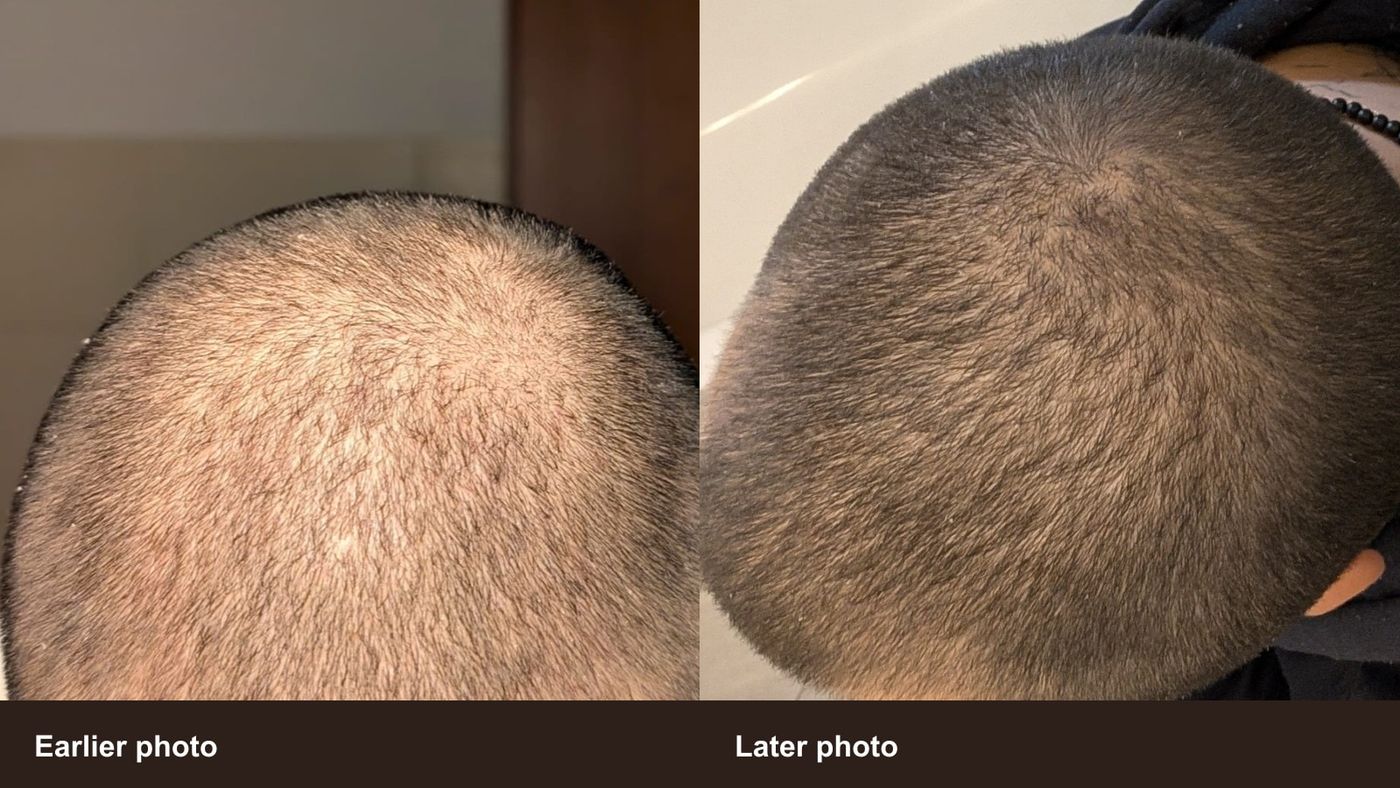
A real crown comparison from my own camera roll
These photos are unretouched. They are shown as an honest tracking example, not proof that minoxidil will produce the same result for everyone.
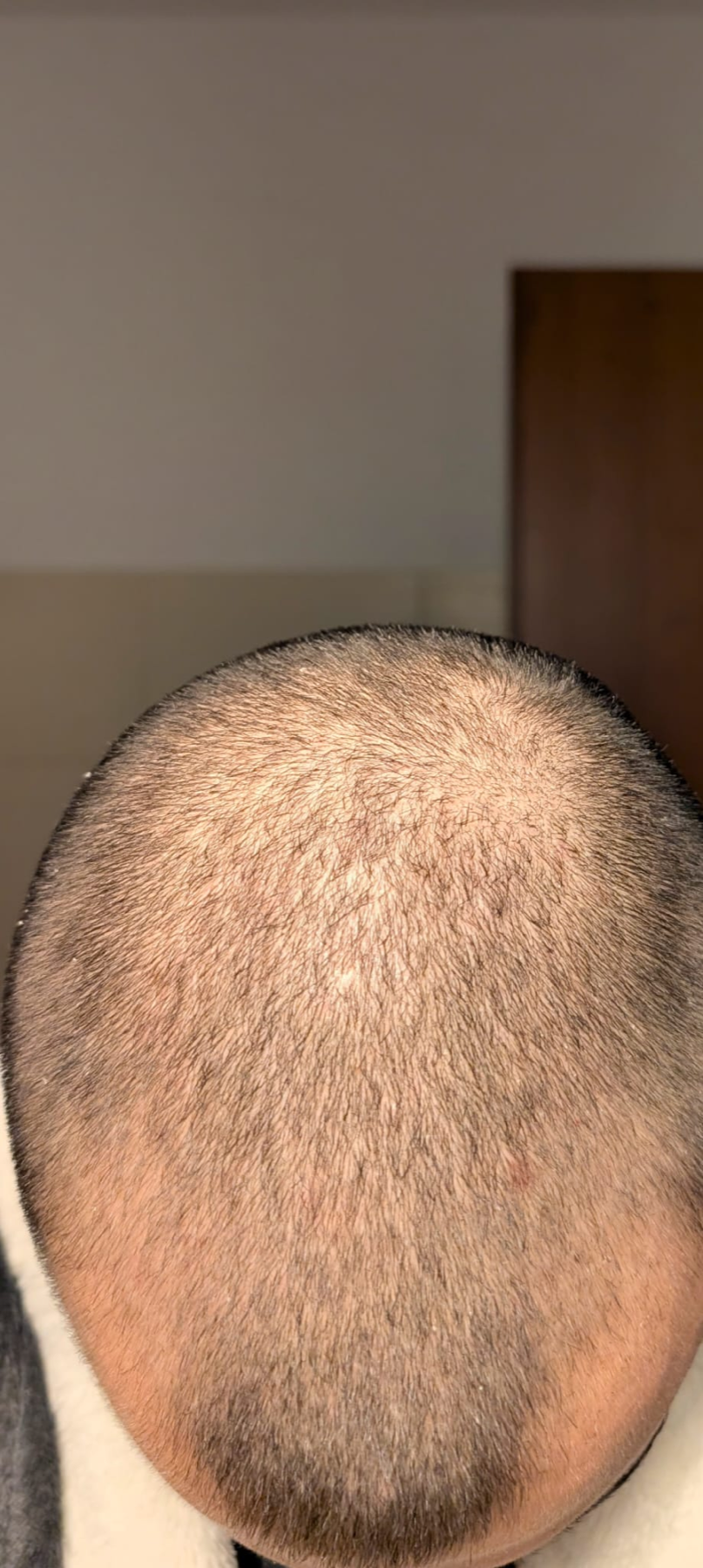
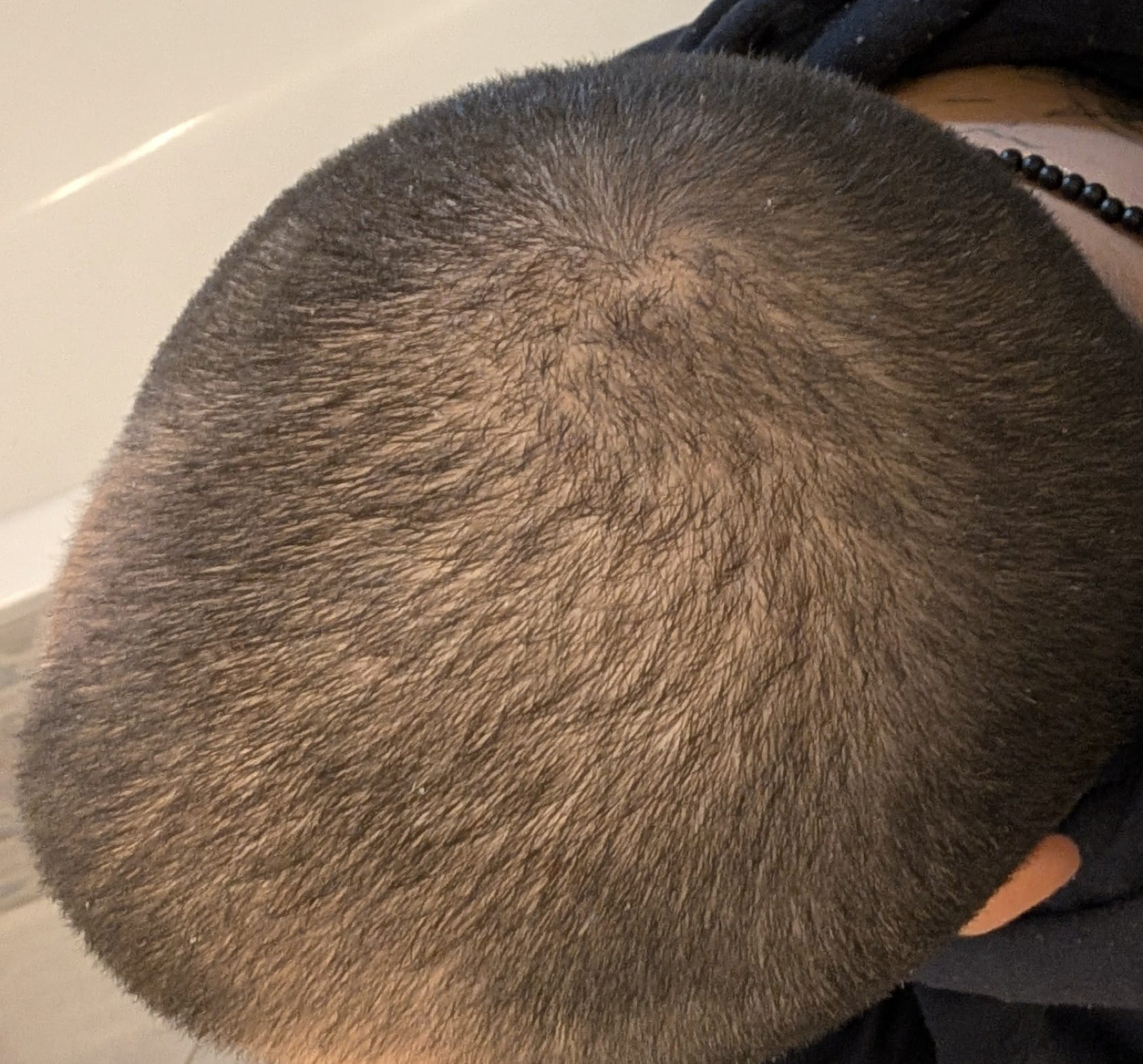
Important context: camera angle, lighting, haircut length, and head position are not perfectly matched. That is exactly why Folicle uses a repeatable photo protocol. Treat this pair as a personal timeline example, not a clinical before-and-after claim.
Quick answer: minoxidil before and after timeline
A realistic minoxidil before and after timeline is not a 30-day transformation. Most people should think in checkpoints: baseline before starting, a noisy month 1, possible shedding or doubt in month 2, first structured review around month 3, and a more meaningful before-and-after comparison around months 4 to 6.
The result you are looking for is not always dramatic regrowth. It can be slower shedding, crown stability, slightly better coverage, or simply photos that stop getting worse under the same lighting. That is why every minoxidil before and after comparison should show the same zone, same hair state, same camera distance, and similar light.
If you only remember one rule: compare matched photos, not moods. Pair this guide with how to take consistent scalp photos and the minoxidil progress tracking guide before deciding whether treatment is working.
How long does minoxidil take to work?
Short answer: minoxidil is usually judged in months, not days. Some labels mention that results may appear as early as two months for some users, while many people need at least four months before a fair visible review. In practice, a 3-month checkpoint is useful for routine and shedding context, and a 6-month checkpoint is more useful for photo comparison.
That does not mean everyone responds, and it does not mean you should ignore side effects or irritation. It means your tracking setup should be built for the actual review window. A single bad week is not a timeline.
If you are starting now, pair this guide with Starting Minoxidil: What to Expect in the First Month and the Minoxidil Dread Shed Timeline so the early months do not feel like disconnected panic.
The realistic checkpoint stack
- Day 0: baseline photos and exact product notes.
- Weeks 2-8: track tolerance and shedding noise, not final results.
- Month 3: first structured review, still cautious.
- Month 4-6: stronger visible comparison window.
- Month 12: long-view stability and clinician discussion if needed.
Start Here
The phrase minoxidil before and after timeline creates unrealistic expectations because most people want the after photo before the biology is ready. Minoxidil is not a one-week cosmetic change. It is a long-term treatment that works through hair cycle timing, consistency, and patience. The hardest part is that the early months can look confusing before they look encouraging.
This guide focuses on the 4 to 6 month window because that is where many people start asking whether anything is happening. Some see early cosmetic change; others mainly see less panic because their photos are finally consistent. Either outcome can be useful, but only if the timeline is interpreted fairly.
This is educational content, not personal medical advice. Minoxidil can irritate the scalp, may not be appropriate for every person, and oral minoxidil is a prescription discussion. If you have side effects, pregnancy questions, heart-related concerns, sudden shedding, or unclear diagnosis, speak with a qualified clinician.
Month 0: Baseline Before You Start
Before starting minoxidil, capture a baseline. That means front hairline, temples, crown, top-down mid-scalp, and any area you care about. Do it before the first application if possible. A baseline is not just for motivation; it protects you from rewriting history. Without it, many people remember their starting point as better or worse than it really was.
Write down the formula, frequency, start date, and any other treatments you are using. If you are also taking finasteride, changing shampoo, starting microneedling, changing contraception, recovering postpartum, or dealing with stress shedding, record that too. When multiple variables change at once, the before and after timeline gets harder to interpret.
The baseline should be boring. Dry hair, neutral styling, same lighting, same camera distance. Do not take the most frightening possible crown photo and call it the official start. Do not take an overly flattering photo either. The goal is a fair comparison, not a dramatic social media transformation.
Month 1: The Noisy Start
Month one is often uneventful visually. The scalp may feel normal, dry, itchy, oily, or irritated depending on the formula and individual sensitivity. Some people become hyper-aware of every strand. Others see nothing and assume the treatment is doing nothing. Neither reaction is enough to judge the treatment.
Some users notice increased shedding early, which can be alarming. Shedding can happen when follicles shift cycling, but not every shed means the treatment is working, and not every lack of shed means it is failing. This is why monthly photos and symptom notes matter more than emotional day-to-day checking. For a related framework, see the hair loss photo protocol.
If irritation is persistent, severe, or associated with rash, swelling, dizziness, chest symptoms, or other concerning changes, do not force consistency for the sake of a timeline. Stop and ask a clinician or pharmacist what to do. A treatment plan is only useful if it is appropriate and tolerated.
Month 2: Shedding, Doubt, and Routine Fatigue
Month two is where many people quit mentally. The novelty is gone, results may not be visible, and shedding can still feel discouraging. This is also where consistent tracking earns its keep. If photos are standardized, you can see whether the appearance is truly worsening or whether the fear is coming from shower strands and harsh lighting. This pairs naturally with the minoxidil shedding timeline.
The most important job in month two is adherence. Missing a day is not a disaster, but chaotic use makes interpretation difficult. If the scalp tolerates the product and a clinician has agreed it is appropriate, the timeline deserves a consistent trial. If the routine is too hard, simplify the schedule with professional guidance rather than quietly drifting.
Do not add five new products out of impatience. Adding oils, supplements, devices, microneedling, and formula changes at the same time makes the timeline impossible to read. A clean trial is boring, but it creates evidence. A chaotic stack creates stories you cannot verify.
Month 3: First Review, Not Final Verdict
Month three is a checkpoint, not a courtroom. Some people may see baby hairs, less shedding, improved density perception, or better crown coverage. Others may see little visible change. The question is whether the same zones look stable, worse, or subtly better compared with baseline. It is not whether you have a perfect after photo.
Review front hairline, temples, crown, and part width separately. A treatment may appear better in one zone before another. The crown can be easier to improve visually than a long-receded temple. Lighting can trick you in both directions, so only compare photos taken under the same conditions.
If the month three photos look worse but shedding has slowed, do not panic automatically. Hair cycle timing can lag. If the photos look worse and symptoms are concerning, or if the pattern does not match the presumed diagnosis, ask for medical input. The value of tracking is that it gives you a better reason to ask.
Months 4 to 6: The Window People Actually Care About
The 4 to 6 month window is where minoxidil before and after comparisons become more meaningful. You may start seeing improved coverage, better density perception, shorter hairs filling in, or at least stabilization. The result is often subtle. It may be obvious only when baseline and month six are placed side by side.
A realistic before and after is not always a dramatic hairline reversal. Sometimes the win is that the crown no longer looks worse, the part looks less stark in consistent lighting, or the shed panic has settled. Stabilization can matter, especially if the alternative would have been continued progression.
If there is no improvement by month six, that does not automatically mean failure, but it is a reasonable time to review the diagnosis, adherence, formula, other treatments, side effects, and expectations with a professional. Some people need more time; some need a different plan; some were tracking the wrong condition.
Minoxidil before and after hairline
Hairline comparisons are the easiest to obsess over and the easiest to distort. A raised eyebrow, wet hair, a tighter pullback, a fresh haircut, or a phone held slightly higher can make the temples look better or worse without any real biological change. For hairline photos, keep the forehead relaxed, hair dry, no fibers, and the camera straight on.
If you are tracking temples, split them into left temple, right temple, and front hairline instead of treating the whole front as one verdict. One side can look sharper than the other. One side can be harder to photograph. A fair minoxidil before and after hairline review needs matched angles for each side.
A good hairline result after several months may be subtle: fewer miniaturized-looking hairs, a denser outline, less see-through styling, or stability instead of continued recession. A bad result should also be judged carefully. If only one harsh-lighting photo looks worse, repeat the setup before changing the plan.
Minoxidil before and after crown
Crown photos need even more discipline because distance changes the story. A crown shot taken two inches closer can make the whorl look larger. A tilted head can expose more scalp. Direct overhead light can exaggerate contrast. If you care about crown progress, use the same room, same light, same head tilt, and ideally the same phone position every time.
For crown before-and-after photos, look for the trend across several sessions rather than one image. Crown density can look different depending on hair length, oiliness, parting, and the natural swirl. A useful comparison asks whether scalp visibility is stable, improving, or worsening across repeated photos from the same setup.
Minoxidil 3 months vs 6 months
Month 3 is a checkpoint, not a courtroom verdict. By month 3, the main questions are usually: did I actually use it consistently, did the scalp tolerate it, did shedding change, and are the photos good enough to compare? Some people see early signs by then. Others see a mixed or boring record.
Month 6 is usually a more useful comparison point. A six-month review gives slow hair cycling more time to show up visually, especially when the baseline is clean. If month 3 looks disappointing but the routine is consistent and the scalp is tolerating it, the next step is often better tracking and clinician context, not instant panic.
How to Take Minoxidil Progress Photos
Take photos before applying product, not when the hair is damp or clumped. Product residue can make hair look thinner or oilier. Use the same hairstyle and avoid changing part direction between sessions. If you dye, cut, buzz, or grow out your hair, add notes because cosmetic changes can look like treatment changes.
Use monthly comparison sets. Put baseline next to month three and month six. Avoid scrolling through every image in between because it can make normal variation feel like a crisis. A clean side-by-side comparison is more honest than a camera roll full of emotional evidence.
If you use Folicle, create zones for crown, hairline, temples, and mid-scalp. Add treatment notes for start date, missed periods, irritation, formula changes, and any clinician updates. The app is helpful because it keeps the timeline organized; it should not become a reason to inspect your hair every hour.
When Minoxidil Photos Are Misleading
Photos are misleading when the hair is wet in one image and dry in another, when the part is moved, when the crown is photographed under a spotlight, or when the camera distance changes. They are also misleading after a haircut, color change, or styling change. Many dramatic before and after comparisons online include variables that are not disclosed.
Another trap is magnification. If you zoom into the same temple every day, you will find something to fear. Hairline edges are naturally irregular. Baby hairs can be new growth, miniaturized hairs, broken hairs, or styling artifacts. A clinician can interpret better than a panic zoom.
The cleanest question is not “does this tiny hair prove it is working?” The better question is “does the same zone look better across several consistent review points?” That question is less exciting, but it is more useful.
Why minoxidil before-and-after timelines differ
Two people can start in the same week and still produce very different-looking timelines. That does not automatically mean one routine is working and the other is failing. Baseline density, the area being photographed, haircut length, lighting, camera distance, missed applications, and changes to the wider routine can all alter what a comparison appears to show.
Treat the timeline as a record, not a promise. If your images look unchanged, first check the photography conditions and use the troubleshooting framework in Minoxidil Not Working? 11 Reasons Your Photos Look the Same. If shedding is the main concern, compare your notes with the minoxidil dread shed timeline instead of judging one alarming photo.
Formulation and route also matter when interpreting a personal log, especially if you switched products or moved between topical and oral treatment under medical supervision. Record the exact change and date rather than merging both periods into one “before and after.” Our topical vs oral minoxidil guide explains the distinction, while the first-month tracking guide shows what to document at the beginning.
The most useful comparison is usually a sequence of standardized checkpoints viewed together. Stability can be meaningful in some contexts, and visible density changes can take time; only a qualified clinician can interpret what your pattern means medically. Folicle helps keep the evidence organized, but it does not diagnose response or recommend treatment changes.
When to Ask for Medical Advice
Ask for medical advice if shedding is sudden and severe, if hair loss is patchy, if the scalp is painful or inflamed, if there are symptoms like dizziness or swelling, or if you are unsure whether minoxidil is appropriate for you. People who are pregnant, trying to conceive, breastfeeding, or managing cardiovascular conditions should be especially cautious and speak with a clinician.
Also ask for help if the timeline does not make sense. If you used minoxidil consistently for months and the same zones are clearly worsening, the diagnosis or plan may need review. Pattern hair loss, telogen effluvium, traction, scalp dermatitis, and alopecia areata can overlap visually for non-experts.
Bring photos, dates, product details, and symptom notes. A dermatologist does not need your entire camera roll. They need a clear summary: when it started, what changed, where it shows, what you tried, and what the photos suggest over time.
The Decision Framework
The most useful way to approach minoxidil before and after timeline is to separate observation, interpretation, and action. Observation is what you can document: photos, dates, symptoms, treatment use, shedding changes, and styling variables. Interpretation is the cautious story you build from that evidence. Action is what you decide next: keep tracking, adjust the routine, ask a clinician, or stop checking so often. Most bad hair decisions happen when people skip observation and jump straight to action.
A simple rule helps: one photo is a clue, three consistent checkpoints are a pattern, and a pattern plus symptoms deserves a plan. If one image looks alarming but the next two do not, the problem may be lighting, oil, angle, haircut, or panic. If the same change appears in the same zone over several months, that is more meaningful. The framework is not glamorous, but it protects you from making permanent decisions from temporary evidence.
This is especially important because hair content online rewards certainty. People want a yes or no answer, a miracle timeline, a stage number, or a before-and-after verdict. Real tracking is slower. It asks whether the evidence is comparable, whether the timeline makes biological sense, and whether the next step is proportionate to the risk. That is how you keep a useful tool from becoming another source of anxiety.
Mistakes That Make the Answer Less Reliable
The first mistake is changing too many variables at once. If you change your shampoo, haircut, supplement stack, treatment routine, styling product, photo lighting, and review schedule in the same month, the timeline becomes almost impossible to interpret. You may still improve, but you will not know what helped. You may also worsen and blame the wrong thing. A cleaner experiment gives you fewer stories and more signal.
The second mistake is confusing cosmetic appearance with follicle change. Hair can look thicker because it is freshly washed, blown out, shorter, darker, or photographed from farther away. It can look thinner because it is wet, oily, grown out, parted differently, or under a spotlight. Before and after comparisons become much more honest when those variables are controlled.
The third mistake is using fear as the review schedule. If you only take photos on bad hair days, the record will be biased. If you only take photos when you feel hopeful, it will be biased in the other direction. Schedule the capture before the emotion shows up. A calendar reminder is less dramatic than a panic check, but it is also more trustworthy.
A 12-Week Review Plan
Week zero is the baseline. Capture the core angles, write down your current routine, and record anything that might matter later: treatment start dates, recent illness, major stress, postpartum timing, scalp irritation, hairstyle tension, or medication changes. Do not try to solve everything on baseline day. Your only job is to create a fair starting point.
Weeks one through eight are for consistency, not verdicts. Keep the same routine unless there is irritation, side effects, or a clinician tells you to adjust. Take scheduled photos, but avoid dramatic interpretation. For minoxidil specifically, the early months can include shedding or no visible change, so a week-by-week verdict is usually misleading.
Week twelve is the first serious review. Put baseline next to week twelve and compare each zone separately. Ask whether the change is visible in more than one angle, whether the context notes explain it, and whether the next step should be patience, better consistency, or professional input. If the evidence is still unclear, that is not failure. It means the system is doing its job by refusing to invent certainty.
How Clinicians Fit Into the Picture
A tracking system is strongest when it knows when to hand off. Dermatologists and qualified clinicians can evaluate history, pattern, scalp symptoms, dermoscopy findings, labs, medication context, and biopsy indications when needed. A photo timeline can describe appearance, but it cannot confirm the cause of the change.
The best thing to bring to an appointment is not a huge camera roll. Bring a short timeline, five to ten comparable photos, treatment or routine notes, and a list of symptoms. Explain when the change started and what you already tried. That makes the appointment more efficient and reduces the chance that the conversation gets lost in vague fear.
Self-tracking and clinical care are not opposites. Tracking can help you notice change earlier, explain it better, and follow a plan more consistently. Clinical care can help determine what the change means and whether treatment is appropriate. The healthiest system uses both at the right time.
Where Folicle Fits
Folicle is useful for minoxidil before and after timeline because the app is built around repeatable photo sessions, zone-by-zone comparisons, and treatment notes. It does not diagnose thinning, prescribe medication, or replace a dermatologist. Its job is to make the evidence cleaner so you are not judging progress from one harsh-lighting selfie.
The best use is simple: capture a baseline, repeat the same angles, review monthly rather than daily, and bring organized photos or notes to a clinician when something looks sudden, patchy, painful, or confusing. That keeps the app in the right role: a tracking tool, not a medical authority.
Final Practical Notes
A good hair tracking system is intentionally boring. The same angle, the same distance, the same lighting, the same review interval, and the same notes will outperform almost any clever trick. Most people do not need more anxiety or more daily inspection; they need fewer variables and a cleaner record. When the record is cleaner, the next decision becomes easier to explain, easier to discuss, and less likely to be driven by a single bad photo.
If you take only one idea from this guide, make it this: do not compare a wet-hair photo to a dry-hair photo, a fresh haircut to a grown-out haircut, or a crown photo under a spotlight to one taken near a window. Hair can look worse or better for reasons that have nothing to do with follicle change. Consistency is what turns a camera into evidence.
Internal minoxidil resources
Minoxidil not working? 11 reasons your photos look the same explains why unchanged photos do not always mean treatment failure.
Topical vs oral minoxidil covers route differences and what to discuss with a clinician.
Minoxidil shedding explains why early shedding can be emotionally noisy and why context matters.
How to track minoxidil progress is the practical method page for baseline photos, month 1 to 6 checkpoints, and exportable records.
PubMed / PMC References
This article is written from lived hair-loss experience and a measurement-first editorial process. It is not medical advice and has not yet been clinician-reviewed. The references below are PubMed or PubMed Central sources used for accuracy checks and clinical context.
Efficacy of nonsurgical treatments for androgenetic alopecia: network meta-analysis: comparative evidence for minoxidil and 5-alpha reductase inhibitors.
Androgenetic alopecia: an update: overview of pattern hair loss, mechanisms, and treatment context.
Updates in therapeutics for male androgenetic alopecia: recent review of male pattern hair-loss treatment options.
Norwood classification review: context for hair-loss classification and pattern description.
Microneedling and its use in hair loss disorders: systematic review: systematic review of microneedling evidence in hair-loss disorders.
Platelet-rich plasma for androgenetic alopecia: review and proposed protocol: review of PRP evidence and protocol considerations.
Telogen Effluvium: A Review of the Literature: review of shedding triggers, diagnosis, and management.
Best photo setup for minoxidil before and after comparisons
The best minoxidil before and after comparison starts before the treatment feels exciting. Capture baseline photos of the hairline, temples, crown, and top-down scalp before changing the routine. Then repeat those same photos at month 1, month 3, and month 6. The same setup matters more than the number of photos.
Do not compare wet hair to dry hair, a fresh haircut to a grown-out haircut, or a crown under direct overhead light to one near a window. Minoxidil timelines are already emotionally noisy because shedding can happen early. Unfair photos make that noise worse.
Use the detailed setup in how to take consistent scalp photos before judging whether a month 3 or month 6 minoxidil photo is meaningful.
Minoxidil results months
The minoxidil results months worth reviewing are month 3 for a cautious check, month 4 to 6 for a stronger visible comparison, and month 12 for a longer stability discussion if your clinician wants one.
What does minoxidil progress look like month by month?
Month by month, minoxidil progress can look like adherence first, shedding noise next, then possible density or hairline changes later. A consistent photo timeline is the only fair way to compare those months.
Frequently asked questions
How long does minoxidil take to work?
Many users need several months before a fair visible review. Some labels mention possible early results around two months, but four to six months is a more realistic tracking window.
Can minoxidil work on the hairline?
Topical labels often focus on vertex use, while real-world use varies. Ask a clinician what is appropriate for your pattern.
Is shedding normal on minoxidil?
Some people report early shedding, but shedding alone does not prove success. Track it and ask a clinician if symptoms are concerning.
When should I take before and after photos?
Take baseline photos before starting and repeat weekly or monthly with the same angles. Review at 3 and 6 months.
What if my photos look worse at month two?
Month two can be noisy. Compare baseline to month three or four under similar conditions, and ask a clinician if shedding is severe or unusual.
Should I use more minoxidil for faster growth?
No. Follow the label or clinician instructions. More frequent use is not a shortcut and may increase problems.
Can Folicle tell me if minoxidil is working?
Folicle helps organize photos and notes. It does not diagnose or prescribe.
When should I ask a dermatologist?
Ask sooner for sudden, patchy, painful, inflamed, or rapidly worsening hair loss, or if side effects worry you.