Minoxidil Not Working? 11 Reasons Your Photos Look the Same
Minoxidil not working? Here are 11 reasons progress photos can look unchanged, what to track, and when to ask a dermatologist.
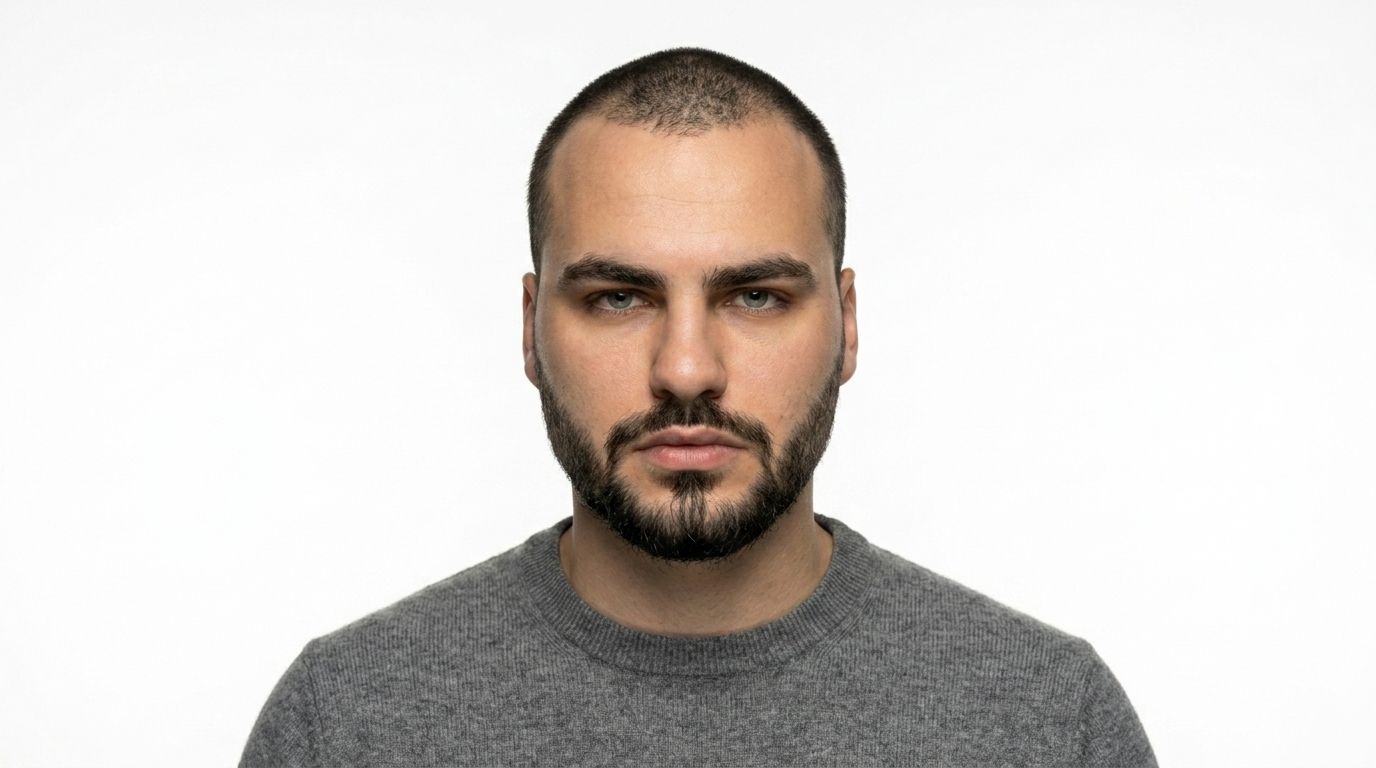
When someone says minoxidil is not working, the internet usually answers too fast. One person says to double the dose. Another says to add tretinoin. Another says to quit and move to oral minoxidil. I understand the urge, because I have been in the treatment-switching mindset myself: looking at the crown, changing the formula, zooming into photos, wondering if the whole routine is fake because one angle looks worse.
But a flat-looking before and after does not always mean failure. Sometimes it means the photos are inconsistent. Sometimes it means the timeline is too early. Sometimes it means the hair is shedding before it stabilizes. Sometimes it means the diagnosis is mixed. And yes, sometimes it means topical minoxidil is not giving you enough response.
This guide is not medical advice. Folicle is built from lived hair-loss experience and a strict photo-tracking method, not from a clinic. Use this as a measurement framework, then bring the record to a board-certified dermatologist if treatment decisions are on the table.
First, define what not working means
Not working can mean four different things. It can mean you are still shedding. It can mean your hairline did not move forward. It can mean density did not improve. It can mean the treatment is too irritating to continue. Those are different problems, and they need different notes.
A good tracking question is more specific: after 4 to 6 months of consistent use, under comparable photo conditions, is the same zone stable, better, or worse? That question is much calmer than staring at a random bathroom photo from last night and asking whether your entire plan failed.
Related internal reads: Minoxidil before and after timeline, how to take consistent scalp photos, and track minoxidil progress.
1. Your baseline photo was not repeatable
This is the boring reason, which is why people ignore it. A crown photo taken under a ceiling light can look brutally different from a crown photo taken near a window. A hairline photo with raised eyebrows can look different from one where your forehead is relaxed. Wet hair, longer hair, shorter hair, styling powder, oil, sweat, and camera distance can all change scalp visibility before treatment has anything to do with it.
If your baseline was a panic photo, it may not be a good scientific anchor. That does not make it useless. It just means you should restart the record instead of arguing with the old one. Take a new baseline with dry hair, even light, the same angles, and no styling fibers. Then compare future sessions to that setup, not to the scariest image in your camera roll.
2. You are judging week 6 like it is month 6
Minoxidil is not an instant cosmetic. Clinical trials and labels commonly evaluate change over months, not days. In men, randomized trials of topical minoxidil used twice-daily treatment over many weeks and measured target-area hair counts. In women, once-daily 5% foam has been studied over 24 weeks. The point is not that everyone needs exactly the same timeline. The point is that a six-week verdict is usually too early.
I like to separate the timeline into emotional checkpoints. Month 1 is routine tolerance. Month 2 is noise. Month 3 is a first structured review. Month 4 to 6 is where before-and-after comparisons become more meaningful. If you quit at the emotional peak of month 2, you may never learn whether the routine had a chance.
3. Shedding is being read as proof of failure
Early shedding is one of the most panic-inducing parts of a minoxidil routine. People see more hair in the sink and assume the product is damaging the follicles. In reality, increased shedding can happen when hair cycling changes. That does not mean every shed is good, and it does not mean you should ignore severe or sudden loss. It means the context matters.
Track the shed, but do not let it be the whole story. Note when it started, whether it is diffuse or localized, whether the scalp hurts or flakes, whether you changed formulas, and whether there was illness, stress, dieting, medication change, or postpartum timing in the months before. A dermatologist can use that timeline better than a single sentence saying, 'minoxidil made me shed'.
4. Application consistency is lower than memory says
Memory is generous. A routine can feel consistent because you think about it every day, even if the actual applications are uneven. Missed weekends, travel, scalp irritation breaks, late-night half-applications, and switching between products can turn a supposed six-month trial into a scattered experiment.
Before calling minoxidil a failure, track adherence honestly for 30 days. Not to shame yourself, but to separate the treatment question from the routine question. A bad photo after six months of consistent use says one thing. A bad photo after six months of maybe, mostly, sometimes use says something else.
5. The vehicle is making your scalp angry
Some people tolerate one formula better than another. Liquid solutions can contain propylene glycol, which may bother some scalps. Foam can feel cleaner for some users, but it can also be harder to apply through longer hair. Compounded formulas can add their own variables. A red, itchy, flaky scalp changes comfort, application consistency, and sometimes how the hair sits in photos.
This is where notes matter. Write down itch, burning, flakes, redness, tenderness, oiliness, and whether symptoms appear after application or all day. If the scalp is inflamed, do not solve it with random stacking. Ask a clinician whether the vehicle, dermatitis, allergy, or another scalp condition is part of the problem.
6. Hair length and styling changed more than density did
A haircut can erase perceived progress. Longer hair can cover better, but it can also separate and expose the scalp. Shorter hair can make density look stronger in one zone and weaker in another. Hair fibers, sea-salt spray, oil, gels, hats, helmets, and sleeping patterns all change how a photo reads.
For progress reviews, I prefer dry hair with no cosmetic coverage and a note about hair length. You do not need a perfect haircut schedule. You just need enough context that a future you does not compare a fresh fade to overgrown hair and call the treatment a miracle or a disaster.
7. The zone you expect to improve is hard to move
A lot of people expect minoxidil to rebuild temples because the hairline is the part they see. But the visual goals can differ by zone. Crown density, mid-scalp coverage, hairline miniaturization, and temple recession do not always respond the same way. If you only judge the most emotionally painful zone, you can miss stability elsewhere.
Take separate photos for front hairline, left temple, right temple, crown, and top-down mid-scalp. Score them separately. It is possible for one zone to stabilize while another still worries you. That mixed result is more useful than a single global verdict.
8. You may be a weaker topical responder
Topical minoxidil has to be converted into its active sulfate form, and research has explored follicular sulfotransferase activity as one reason response varies. This does not mean you should self-diagnose as a non-responder from Reddit. It means there is a biological reason some people see less from topical minoxidil than others.
The practical move is not to panic-buy three add-ons in the same week. The practical move is to bring a clean six-month record to a dermatologist and ask what the next evidence-based option is. That conversation may include adherence, vehicle changes, diagnosis, oral minoxidil, anti-androgens, inflammation, labs, or doing nothing because the photos show stability.
9. The diagnosis may be wrong or mixed
Not every hair-loss pattern is simple androgenetic alopecia. Telogen effluvium, postpartum shedding, alopecia areata, traction, seborrheic dermatitis, psoriasis, iron deficiency, thyroid disease, restrictive dieting, medications, and scarring alopecias can overlap with pattern loss. Minoxidil may be part of care in some situations, but the cause still matters.
Red flags deserve medical context sooner: sudden heavy shedding, patchy round loss, scalp pain, scaling, pustules, crusting, broken hairs, eyebrow loss, or rapid change. Folicle can help organize photos and notes. It cannot diagnose the reason your hair is changing.
10. You changed too many variables at once
The classic panic stack is familiar: minoxidil, then microneedling, then ketoconazole, then a different minoxidil brand, then topical finasteride, then supplements, then a new shampoo, all inside six weeks. If the photo looks better, you do not know why. If the photo looks worse, you do not know what caused it.
A cleaner plan is slower. Change one meaningful variable at a time when possible. Note the date. Keep the photo setup the same. Review monthly. Hair growth is slow enough that chaos feels productive, but it often destroys the evidence you need.
11. The treatment may be working as maintenance
Maintenance is emotionally unsatisfying because it does not make a dramatic before-and-after. But for progressive hair loss, stability can be a result. If the crown looked like it was getting worse every few months and then becomes stable across comparable photos, that matters.
The problem is that maintenance is hard to feel. You do not get a movie scene. You get boring photos that stop changing. That is exactly why scheduled tracking helps: it lets boring become visible.
A 90-day reset if minoxidil feels like nothing is happening
For the next 90 days, stop trying to extract certainty from every mirror check. Take one baseline set now: front, temples, crown, mid-scalp or part line. Use the same room, light, dry hair state, and camera distance. Log each application honestly. Add notes for itch, flakes, missed days, haircut, illness, stress, and formula changes.
At day 30, review routine tolerance, not regrowth. At day 60, review consistency and side effects. At day 90, compare only matched photos. If the record is still unclear, keep going to month 4 to 6 or bring the record to a dermatologist. The goal is not to force optimism. The goal is to stop making decisions from one bad angle.
Where Folicle fits
Folicle exists for this exact gap between panic and medical decisions. It helps you repeat scalp photos, attach treatment notes, watch slow changes, and export a cleaner PDF for a dermatologist. It does not tell you what to take. It does not diagnose your shedding. It makes the evidence less messy.
That matters because hair-loss routines punish emotional checking. If you can turn 'is minoxidil working?' into a timeline of comparable photos, missed days, symptoms, and monthly checkpoints, the next step becomes much less dramatic.
How to read minoxidil photos without lying to yourself
The hard part of progress photos is not taking them. The hard part is interpreting them without letting fear choose the evidence. If you are scared, you will find the worst photo. If you are hopeful, you will find the best photo. Neither one is a method. A method means you decide the rules before you know whether the photo will make you happy.
Use the same zone labels every time. Front hairline is not the same as temples. Crown is not the same as mid-scalp. A left temple photo should not be compared with a slightly rotated front photo. This sounds obvious until you are anxious and start swiping through every angle looking for one that proves something.
I also like a simple confidence label. High confidence means same light, same distance, dry hair, similar length, and no styling. Medium confidence means one variable changed but the photo is still useful. Low confidence means the photo is mostly emotional evidence. Low-confidence photos can stay in the record, but they should not drive treatment decisions.
What not to do when you think minoxidil failed
Do not add five new treatments in a week just because one comparison looks flat. This is the trap I understand the most. You feel behind, so you try to catch up with complexity. But complexity can become a way to avoid measurement. If you add a new topical, a supplement, microneedling, a shampoo, and a dose change together, you no longer have a readable experiment.
Do not change the lighting to find reassurance. If soft light makes you feel better and harsh light makes you feel worse, the answer is not to choose the flattering one forever. The answer is to choose a repeatable one. Even light from the same place beats dramatic light from a different place every session.
Do not decide from a post-haircut photo unless haircut length is part of the note. Freshly cut hair can make the hairline look sharper, the crown more exposed, or the mid-scalp thicker depending on the style. A haircut is a visual event. Treat it like one.
A dermatologist-ready minoxidil note
A useful note is short but specific: treatment name, concentration if known, application frequency, missed days, scalp symptoms, shedding changes, and anything else that could affect hair cycling. For example: "5% foam most nights, missed 5 days during travel, mild itch week 3, haircut May 2, crown photos same bathroom light." That note tells a clinician far more than "I think it is not working."
If you use a compounded formula, write down every active ingredient and strength from the label. Minoxidil mixed with finasteride, tretinoin, caffeine, latanoprost, or other ingredients is not the same as plain over-the-counter minoxidil. If irritation starts, the exact formula matters.
Also write down what would count as success before you start. Is success less shedding? Crown stability? Better hairline density? A thicker part line? Fewer panic checks? If you do not define the target, every month becomes a vague emotional referendum.
When the honest answer is uncertainty
Sometimes the right conclusion after 90 days is not yes or no. It is "unclear." That can feel frustrating, but it is still progress if your record is cleaner. Unclear with matched photos, adherence notes, and symptom tracking is a better place than certainty built from random images.
Uncertainty is also where a clinician can help. A dermatologist can decide whether the pattern fits androgenetic alopecia, whether labs make sense, whether inflammation needs treatment, whether oral options are appropriate, or whether the current routine needs more time. Your job is not to become your own doctor. Your job is to bring better evidence.
If you are starting from scratch, pair this with the hair photo alignment guide and the Norwood scale calculator so the pattern and the photos are easier to discuss.
References
A multicenter randomized placebo-controlled trial of 5% minoxidil topical foam in men - PubMed
Once-daily 5% minoxidil foam versus twice-daily 2% solution in women - PubMed
Novel enzymatic assay predicts minoxidil response in androgenetic alopecia - PubMed
Tretinoin and follicular sulfotransferase activity in minoxidil response - PubMed
Oral minoxidil vs topical minoxidil for male androgenetic alopecia - PubMed
Low-dose oral minoxidil for alopecia: comprehensive review - PMC
Frequently asked questions
How long should I wait before saying minoxidil is not working?
A practical review window is usually 4 to 6 months of consistent use with comparable photos. Month 1 is mostly about tolerance and routine. Month 2 can be noisy. Month 3 is a checkpoint, not always a final verdict. Ask a dermatologist for personal timing.
Can minoxidil shedding mean it is working?
Shedding can happen when hair cycling changes, but it is not automatically proof of success. Track when it started, whether it is diffuse or patchy, and whether you have scalp symptoms. Sudden, severe, painful, or patchy shedding deserves medical advice.
Why do my minoxidil before and after photos look worse?
Photos can look worse because of lighting, wet hair, haircut length, camera distance, scalp irritation, shedding, or true progression. Compare only matched photos from the same angle, light, and hair state before changing the treatment plan.
Does topical minoxidil fail for some people?
Yes, response varies. Research has explored follicular sulfotransferase activity as one reason topical minoxidil response differs. Do not self-diagnose as a non-responder from one photo. Use a consistent record and discuss options with a dermatologist.
Should I switch to oral minoxidil if topical is not working?
Do not switch on your own. Oral minoxidil is prescription/off-label for hair loss in many places and can have systemic side effects. Bring your timeline, photos, adherence notes, and symptoms to a clinician before changing routes.
Can changing minoxidil brands affect progress?
It can affect comfort, irritation, adherence, and application. Foam, liquid, compounded formulas, and different vehicles may feel different on the scalp. Track formula changes so you do not confuse a product switch with a treatment result.
Is once-daily minoxidil enough?
It depends on formulation, sex, diagnosis, and your clinician plan. Some once-daily foam regimens have been studied, while many labels use twice-daily application. Follow the product label or clinician instructions rather than copying a forum routine.
What should I track with minoxidil?
Track dose, missed applications, formula changes, scalp symptoms, shedding, haircut dates, stress or illness, and matched photos for hairline, temples, crown, and mid-scalp. That record is more useful than daily mirror checking.
Can Folicle tell me if minoxidil is working?
Folicle can help you take consistent photos, log treatment context, and review trends. It does not diagnose treatment response or prescribe medication. Use it to create a clearer record for yourself and your dermatologist.
When should I ask a dermatologist?
Ask sooner if shedding is sudden, patchy, painful, inflamed, associated with scalp scaling or sores, or if side effects worry you. Also ask if you have used minoxidil consistently for several months and the photos still show clear worsening.